The Northern Illinois University Shooting Five Years Later

Five years ago today, 14 February 2008, I was a graduate student at Northern Illinois University when a gunman walked into Cole Hall at the center of campus with a machine gun and opened fire. He killed five students and himself. I was fortunate enough to be several blocks away at the time of the shooting teaching a class in one of the dormitories on the edge of campus instead of in Cole, which I walked through every day when I was on campus, or in the English building, Reavis Hall, where my office was. Many of my officemates were in Reavis at the time and could see the victims’ bodies being ferried from Cole to waiting ambulances afterwards.

In retrospect, considering the recent massacres in Newtown, Connecticut, and Aurora, Colorado, the NIU community was “lucky” to only suffer a loss of life in the single digits. But the fact that civilians still have access to the weapons of mass destruction used in these killings is abhorrent. There is no rational argument for keeping these military-grade guns legal. It sickens me to think of all the lives that continue to be lost in the United States because Congress chooses to use the issue of gun violence as a political football instead of taking action to protect its constituents. I am happy that President Obama called for action on this issue in his State of the Union address (you can watch the relevant part of the speech here), and I hope that Congress finally realizes that it is time for action, though I remain skeptical about their willingness to do anything.

To those of you reading this who are against any form of gun control, I ask you to simply think about how you would feel if it were one of your children who had been a victim of these shootings. Doesn’t keeping your children safe warrant an end to the thoughtless political partisanship on this issue?

Books Acquired Recently

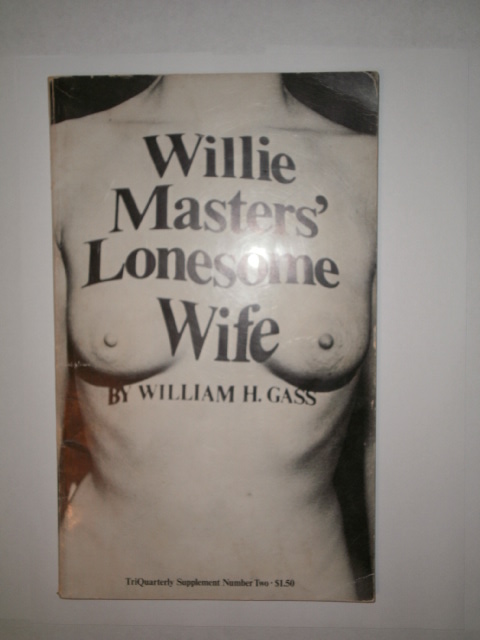
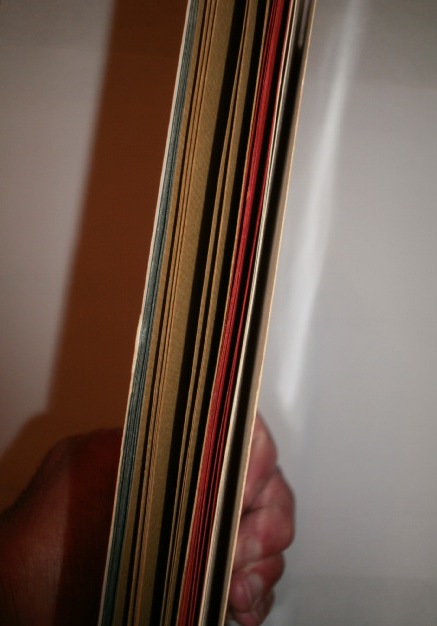
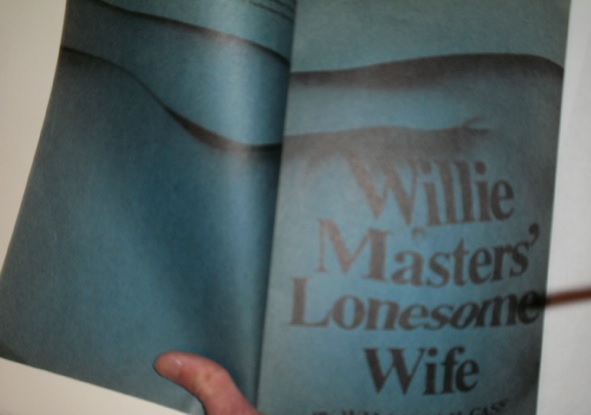
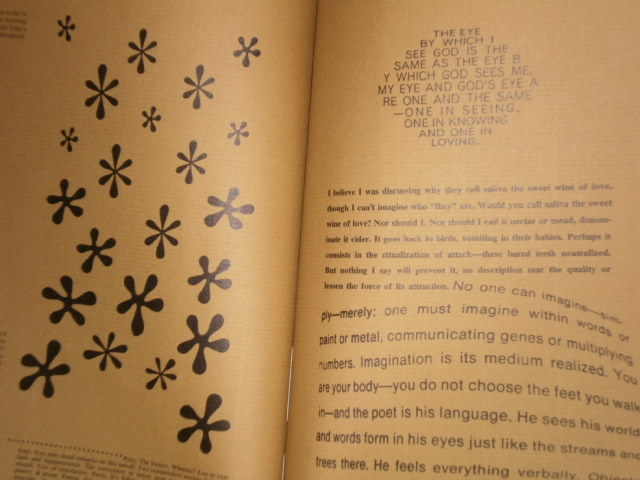
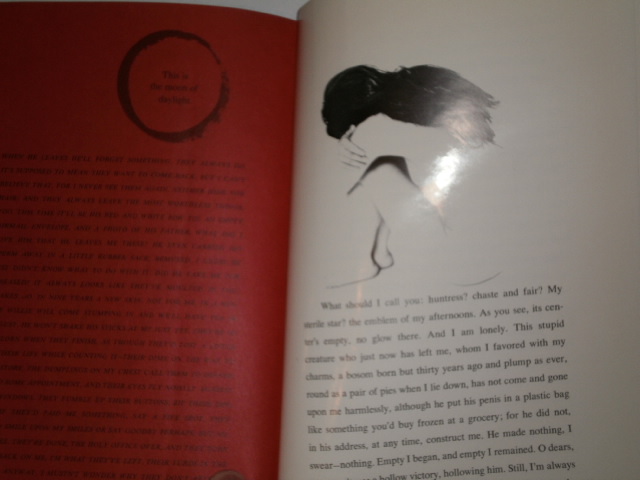
Gass, William. Willie Masters’ Lonesome Wife. 1968. Normal: Dalkey, 1989.

I recently read about this novel, which includes a number of photographs, figures, and elements of typographical play. I am quite fond of these postmodern elements because I appreciate it when a book is fascinating as a physical object (as an artwork, even) as well as intellectually.

hooks, bell. Writing Beyond Race: Living Theory and Practice. New York: Routledge, 2013.

I love bell hooks and purchased this book for a discount at the Modern Language Association conference last month. I must say that I am not impressed with Routledge’s shipping department, as the book took over a month to arrive from the time I ordered it.

Kauffman, Janet. Obscene Gestures for Women. 1989. New York: Vintage, 1990.

I read this short story collection in college about a dozen years ago, but don’t really remember it. However, several of Kauffman’s other books (Collaborators, The Body in Four Parts, and Characters on the Loose) are texts that I have enjoyed repeatedly, and since I am writing about her in an essay on Mennonite literature which I am working on, I thought I would give this book another go.

The Gass and Kauffman books were bought on amazon.com.

Sad Post Office News

The United States Postal Service just announced that beginning in August they will no longer deliver letters on Saturdays. This is the latest cost-cutting measure in the USPS’s continuing fight to stay solvent, which has become more and more difficult with the increased use of email and other forms of electronic communication, and with Congress’s refusal to take meaningful action on the issue. I understand why the USPS is making the move, but it saddens me as a symbol of how this once great institution has been diminished. Most Americans just take the USPS for granted, not realizing how amazingly good–how efficient, how reliable–our postal service is in comparison to most countries’, including Canada’s. We won’t understand what we have until it is gone.

Books Acquired Recently

Cohen, Samuel, and Lee Konstantinou, eds. The Legacy of David Foster Wallace. Iowa City: U of Iowa P, 2012.

I ordered this book at a discounted price at the Modern Language Association bookfair last month, and it finally arrived this week. As I’ve mentioned numerous times here, I am a big fan of Wallace’s work, especially Infinite Jest. I am happy to see that scholars are actively writing about him, as his work certainly deserves canonization. I would love to teach Infinite Jest sometime, but it is so large that one would really need to devote an entire course to it. His first short story collection, Girl With Curious Hair, will have to suffice.

Jackson, Lawrence P. The Indignant Generation: A Narrative History of African American Writers and Critics, 1934-1960. Princeton: Princeton UP, 2011.

I bought this volume at a discount from Labyrinth Books, which is the premier independent seller of scholarly books in the United States. The book covers the period of twentieth century African American literature that I know the least about even though several of my favorite authors, including James Baldwin and Gwendolyn Brooks, were active during it, so I am excited to read the text in order to remedy this gap.

Back in the Saddle

I haven’t posted in several weeks because I am currently on the job market and have had several interviews that have taken up all of my non-teaching time. However, my life should be a little less crazy in the near future, so I’ll be able to get back to my normal routine of posting a few times per week.

Here are a few brief thoughts on subjects that have been kicking around in my head recently:

1. I just finished teaching Zadie Smith’s White Teeth in my Literary Criticism and Research course, and it struck me during my re-reading of the book just how much it is a response to the Rushdie Affair. Millat and his fundamentalist Muslim friends go to an anti-Rushdie protest midway through the novel, and then the Affair is never explicitly mentioned again (in fact, even during this episode Rushie is not mentioned by name). But the final third of the book is devoted to the conflict between science and religion, with Millat’s group KEVIN and Hortense’s cabal of Jehovah’s Witnesses on one side and Marcus and Magid on the other. Of course these two narratives do not have to be nearly as much in opposition as public discourse in the United States claims they are, but the Rushdie Affair and its portrayal in White Teeth illuminates how when one side (the religious fundamentalists) forces the dialogue to be black or white, one must choose sides, and that the correct choice is to be on the side of freedom of speech and rationality.

2. I bought two new suits in preparation for my interviews and have been thinking about how they relate to the presentation of myself as a person, and as a part of this preoccupation I have been noticing other people’s clothing much more than usual. Last night I was at a party and was so intrigued by someone’s shirt that I asked to feel it even though I had never met the person before! I like the concept of putting a lot of care and consideration into building one’s wardrobe, but usually I am too lazy to actually do this.

3. Danny Welbeck really needs a goal, having only scored once in the league this season. He’s been getting a lot of playing time recently and is often in the starting lineup (today he came on as a late substitute against Fulham, and this kind of usage will probably become the norm now that Wayne Rooney is fully fit again), but has been unable to take advantage of these opportunities. His overall play has been decent, but as a striker his lack of scoring is glaring. The team hasn’t been suffering from Welbeck’s drought because of the presence of Wayne Rooney and Robin van Persie (and perhaps van Persie’s presence has thrown Welbeck off his game a bit, though that is no excuse). It is clear, however, that when he gets the ball in scoring positions he is thinking too much–his lack of goals is in his head. He’s one of my favorite players, and should have a long and successful career at United, but really needs a goal so that he can stop thinking about it and continue with his development.

Two Recent Publications

I’ve recently had two publications appear online. The first is a review of Michael Moon’s book Darger’s Resources, which appears in both the print and electronic versions of the Rocky Mountain Review, the journal of the Rocky Mountain Modern Language association. The electronic version is here.

The second is an essay on Miriam Toews’s Summer of My Amazing Luck in the Journal of the Center for Mennonite Writing, which is here.

Fifty Shades of Grey

I just finished reading E L James’s bestselling romance novel Fifty Shades of Grey because one of my students is writing his senior thesis on it. It isn’t horrible, and is worth reading as sociological research. I had heard that the writing was atrocious, but aside from James’s overuse of the words “jeez” and “crap” and the frequent misstep of having her American characters use English idioms, it’s no worse than any other romance novel.

Fifty Shades has gained notoriety in part because of its depiction of BDSM. While its general description of the BDSM scene (especially the Dom/sub contract) is accurate, I would not classify it as a BDSM novel in the way that Molly Weatherfield’s, Claire Thompson’s, or Pauline Réage’s books are. Rather, BDSM is used to titillate the reader, but the novel’s ultimate view of it is a conventional, close-minded one, as Christian is portrayed as both an ineffective Dom and a demented freak, and the protagonist Anastasia is unable to accept her submissive side. She is a strong character–I don’t see much merit in the criticism of her or the novel as sexist (I think this criticism comes from a misunderstanding of the Dom/sub dynamic, in which it is actually the sub who has all the power, as the novel states. As third-wave feminism teaches us, if a woman gets pleasure from being a sub, there is nothing wrong with or degrading about it. However, this critique is valid in that I don’t think the book would be as successful if it involved a female Dom and a male sub, but this is a problem with sexist readers, not with Fifty Shades itself)–but she isn’t ever able to accept herself; she is too worried about societal conventions. I had hoped that Fifty Shades‘s popularity might be a signal of increasingly liberal attitudes toward sexuality in the general reading public, but there’s nothing that questions the status quo in it.

Aside from being sexually milquetoastish, Fifty Shades is also plagued by homophobic and racist elements. Christian’s reaction to Anastasia’s question of whether he is gay or not and the subsequent references to this exchange clearly imply that there is something that is somehow lesser about being gay. But the treatment of the character José is the most offensive aspect of the book. He is first portrayed as the stereotypical Latino comic relief, and then as a Don Juan-esque sexual predator. The stock nature of the novel’s secondary characters is mostly benign, but in this instance is cringe-worthy.

Brief Thoughts on the Baseball Hall of Fame

The Baseball Hall of Fame announced today that no new members were elected from the players’ ballot. Jonah Keri has an excellent column here about why this result is ridiculous, but not catastrophic. As a Mets fan, I was all ready to write an outraged post if Mike Piazza didn’t get elected, but since no one else got elected, either, I can’t really complain.

Books Acquired Recently: Strand Edition

On New Year’s Day I visited the Strand Bookstore at the corner of 12th Street and Broadway in New York City. The Strand is my favorite place in the world; visiting it is a necessary experience for any book lover able to afford a trip to New York. I used to live within walking distance of it, and visit every time I am in the city. I hadn’t been to it since February 2011, which was the longest amount of time I’d been away since I first shopped there. I bought so much that I couldn’t fit it all in my suitcase and had to ship most of the books to myself. I was waiting for all of them to arrive here in Utah before writing about them.

Baker, Nicholson. The Everlasting Story of Nory. 1998. New York: Vintage, 1999.

Baker is one of my favorite writers, and this is the only one of his novels that I didn’t have. I read it on the plane home yesterday and it was a light, fun read, though not as good as his other books.

Calvino, Italo. If On a Winter’s Night a Traveler. 1979. Trans. William Weaver. Orlando: Harcourt, 1981.

This book was recently recommended to me by a colleague.

Danielewski, Mark Z. The Fifty Year Sword. New York: Pantheon, 2012.

I really enjoy the infusion of visual elements in Danielewski’s writing (which itself is so-so). This book is stimulating as an object: it includes Danielewski’s usual printed flights of fancy, and its dust jacket is riddled with pinholes that make the book look like it has chicken pox.

Houellebecq, Michel. Platform. 2001. Trans. Frank Wynne. New York: Vintage, 2004.

I’ve been meaning to read Houellebecq for a while because of my interest in fiction about sex. This was (perhaps surprisingly) the only one of his books in stock.

Hughes, Langston. Not Without Laughter. 1930. New York: Scribner, 1995.

I love Hughes’s poetry, but haven’t read any of his fiction, thus I was happy to buy this volume when I saw it on sale for only $5.95.

Pamuk, Orhan. The Museum of Innocence. 2008. Trans. Maureen Freely. London: Faber, 2010.

I recently read about this book, which has a corresponding museum curated by Pamuk in Istanbul.

Wallace, David Foster. Brief Interviews With Hideous Men. 1999. New York: Back Bay, 2000.

—. Girl With Curious Hair. New York: Norton, 1989.

—. Oblivion. 2004. New York: Back Bay, 2005.

I love Wallace’s writing, and was happy that the Strand had all three of his short story collections in stock.

Books Acquired Recently: MLA Edition

Today I made my long-anticipated visit to the MLA Convention book fair. I acquired five books and ordered several more that will be shipped to me, which I will write about once I receive them. All of the books interest me, but the fact that I got several of them at a discount made them irresistable. I noticed that the majority of the publisher representatives at the fair were women, and especially younger women who looked to be in their twenties. This trend was especially pronounced in representatives from commercial publishers. My perhaps cynical thought upon making this observation was “this is where excess English majors end up.” But that’s not quite fair. I suppose that the job would be a fascinating and even enjoyable one. On the one hand it’s just being a cashier, but on the other, it involves travel and the opportunity to meet lots of people.

The books that I acquired at MLA with the view of downtown Boston from my hotel room window in the background.

Barnes, Julian. The Sense of an Ending. 2011. New York: Vintage, 2012.

I’ve heard good things about Barnes’s work and read a laudatory review of this novel when it was published in hardcover, thus I was happy to buy the paperback for only $3.00.

Holland, Sharon Patricia. The Erotic Life of Racism. Durham: Duke UP, 2012.

This book’s blurb begins “A major intervention in the fields of critical race theory, black feminism, and queer theory….” Boom. I was sold right there. (Yes, I realize that I am a total nerd.) Duke University Press publishes so many yummy books about queerness and about race that it was very difficult to restrain myself from buying many more of their books. There was a history of the concept of the orgasm that was especially tempting to me, but I was able to resist.

Iversen, Kristen. Full Body Burden: Growing Up in the Nuclear Shadow of Rocky Flats. New York: Crown, 2012.

The publisher was giving hardcover copies away for free, and Iversen was there to sign them, so I picked one up. It looks somewhat interesting–it is about her childhood growing up in one of the classified towns the U.S. government set up in the 1940s and 1950s for nuclear weapons research and development. I’m not sure how I as an author would feel about my publisher giving my books away for free while making me sit there and watch. Does the publisher think no one will buy them, and so this is a PR-friendly way of getting rid of them? Do they think the book is so good that they can give it away to professors because we’ll all want to assign it in our classes? I admit to being confused by this promotion.

Olds, Sharon. Stag’s Leap. New York: Knopf, 2012.

I love Olds’s poetry and was able to buy her latest collection for only $3.00. This price makes me happy, but it is also a shame to pay so little for something so valuable as poetry.

Scott-Heron, Gil. The Last Holiday: A Memoir. New York: Grove, 2012.

I’ve been fascinated by Scott-Heron since I heard his two most famous songs/poems, “The Revolution Will Not Be Televised” and “Whitey on the Moon” back in high school. His art is so wise, and yet he struggled with an addiction to heroin up until the time of his death. Getting the opportunity to learn more about this paradox alone makes the book worth the $5.00 I paid for it.