Book Acquired Recently: Leslie Feinberg’s Stone Butch Blues

Feinberg, Leslie. Stone Butch Blues. 1993. Los Angeles: Alyson, 2003.

I’ve been meaning to read this queer classic for a while, and recently was on amazon.com buying something else, and decided to finally buy Feinberg’s novel to help me get to the $25.00 free shipping threshold. To my horror I discovered that the book is currently out of print! I was able to buy a used copy for $20.00, which seems high, but since it is both out of print and important it may become rare quite quickly, so I felt it was worth it.

The reason this important book is out of print is that its publisher, Alyson Books, went out of business a few years ago. This is yet another example of the publishing industry’s troubles–it is more and more difficult for independent publishers to stay alive. Alyson was an important publisher of LGBT works that are now in limbo. One hopes that some other publisher will recognize their value and buy the rights. In the case of Stone Butch Blues, it still gets written about, and remained on syllabi while it was in print, so it would be a good investment for another company to make.

Ode to Mennonot

Mennonot, a zine “For Mennos [i.e., Mennonites] on the Margins,” published thirteen issues between 1993 and 2003 (though issue 12 appeared in 1999 and issue 13 did not appear until four years later). Happily, the full set has just been put online for free here. Mennonot included commentary on the state of institutional Mennonitism, interviews, reader rants, humor, and poetry by important Mennonite writers such as Julia Spicher Kasdorf, Jeff Gundy, and Patrick Friesen. It provided an important safe space for people who were raised Mennonite, but had questions about the tradition to air their “heretical” thoughts and encounter ideas from others going through a similar struggle. Retrospectively, I think that its most important contribution was its early (by Mennonite standards), unwavering advocacy for LGBT rights both in the Church and in broader society. There are numerous articles and letters from LGBT persons throughout Mennonot‘s run, beginning with the first issue.

I first encountered Mennonot towards the end of college, reading the last three issues, but I haven’t thought about it much since then. It feels good to get reacquainted! I’ve been reading through it for the past week or so, which has been enjoyable. It is fascinating to see what issues were important to “Mennonots” (a label which currently describes me) twenty years ago. Sadly, the institutional Mennonite Church is still nearly as oppressive of women and LGBT persons now as it was then.

Books Acquired Recently

Baym, Nina, ed. The Norton Anthology of American Literature Volume A: Beginnings to 1820. 8th ed. New York: Norton, 2012.

—. The Norton Anthology of American Literature Volume B: 1820-1865. 8th ed. New York: Norton, 2012.

I requested these two exam copies from the publisher because I will be teaching an early American literature class in the fall. I generally dislike teaching with anthologies, but they are helpful reference tools when planning a course because they provide a ready-made list of the authors to consider including in a syllabus.

Cervantes, Lorna Dee. Ciento: 100 100-Word Love Poems. San Antonio: Wings, 2011.

I received a review copy of this collection from the Rocky Mountain Review (the journal of the Rocky Mountain Modern Language Association), for whom I will be writing a review. I’ve only read a few of Cervantes’s poems before, so I look forward to becoming more familiar with her work. The concept of the book sounds interesting, and it is printed in dark brown ink instead of black ink, so it is a fascinating object that I will be happy to have in my library even if I end up not liking it.

Kasdorf, Julia Spicher. The Body and the Book: Writing from a Mennonite Life: Essays and Poems. University Park: Pennsylvania State UP, 2009.

I acquired this and Kauffman’s book from amazon.com as part of my research for an essay on Mennonite literature that I am currently working on. I have the 2001 Johns Hopkins first edition of The Body and the Book, which I read and loved as soon as it was published, but the 2009 edition has a new preface that I wanted to read, and I was able to find a used copy for only a few dollars, so I bought it instead of finding it in a library. As regular readers of this blog know, I am always happy for any excuse to buy a book!

Kauffman, Janet. Places in the World a Woman Could Walk. 1983. Saint Paul: Graywolf, 1996.

I enjoy Kauffman’s work, and read this book back in college, but do not remember it well. This is the only book of her fiction that I don’t already own (she has also published two collections of poetry), and I found a used, signed (!) copy at a very affordable price.

Rowell, Charles Henry, ed. Angles of Ascent: A Norton Anthology of Contemporary African American Poetry. New York: Norton, 2013.

This is another exam copy from the publisher. I will be assigning it for my May Term African American Literature After 1960 class. I do find poetry anthologies useful, and am rather excited about this one because it is reasonably priced and has a strong selection of poets (though it omits Essex Hemphill, which is unexcusable).
Manchester United’s 2013/2014 Change Strip

The design for Manchester United’s 2013/2014 change strip has been leaked, and you can view it here. I love United, but I must say that this is an ugly, ugly shirt. The blue is fine, as this has been a traditional color for United change strips and they wore it against Benfica at Wembley when they won their first European Cup in 1968, but the lumberjack flannel shirt pattern is atrocious. The black also clashes with the blue because they are both darker colors–almost any other color (yellow might be decent) would be better than the black even though black is the club’s secondary color. I would much prefer a simple blue shirt with the same design as their primary red ones. It would also be neat to have a green and yellow change strip as an homage to the club’s original colors. They used this color scheme one year in the mid-1990s and I have thought about purchasing one of these shirts used, but the design is marred by the ’90s garishness that was all too common in the footballing world.

Book Acquired Recently: Willie Masters’ Lonesome Wife, First Edition

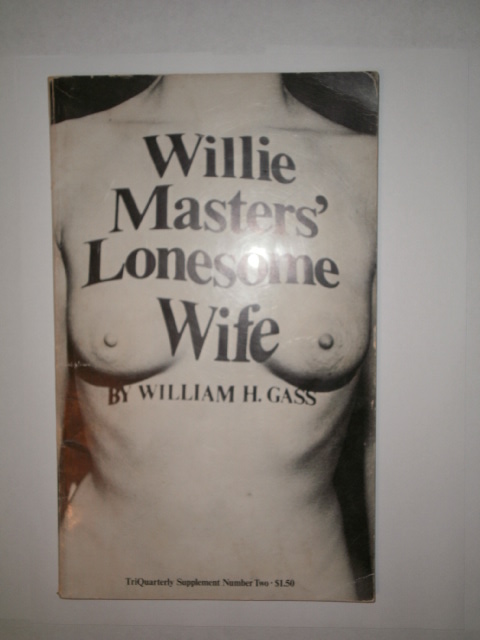
Gass, William H. Willie Masters’ Lonesome Wife. TriQuarterly Supplement Number Two (1968): n.p.

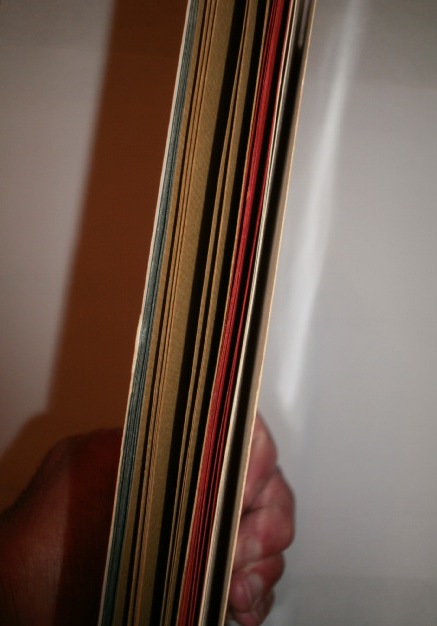
I recently bought and read the Dalkey Archive Press edition of Gass’s novella (the only one currently in print), but it does not replicated the colored pages of the original edition, so I was happy to find this copy for a reasonable price–$30.00–from one of amazon.com’s independent sellers.

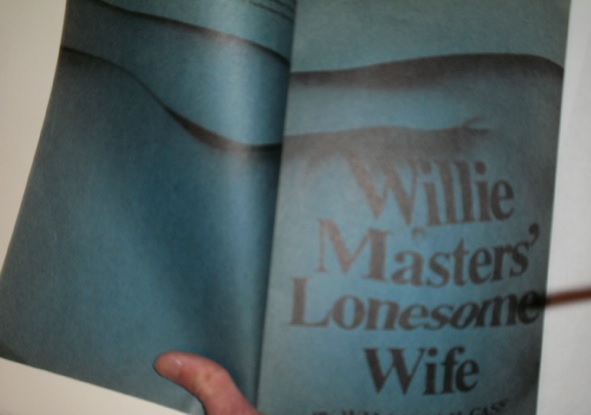
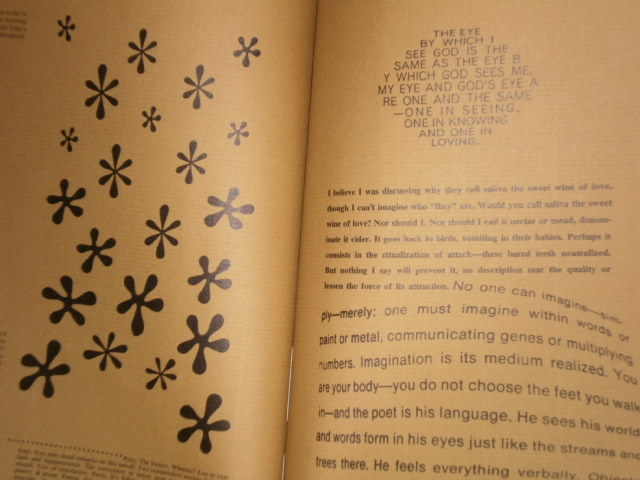
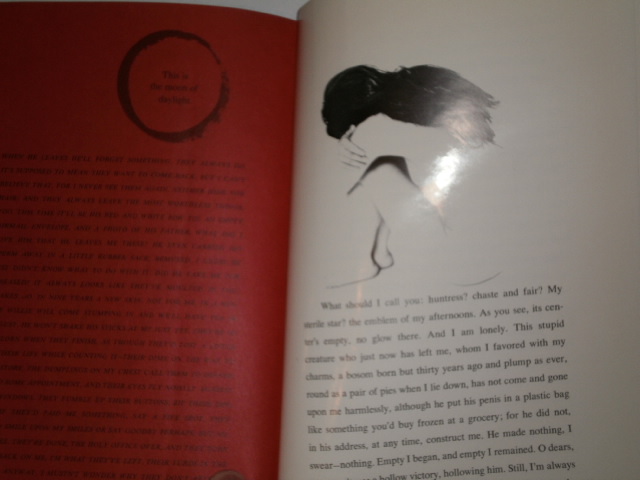
It is a beautiful piece of printing craftsmanship. There are four sections: blue, yellow, red, and white, with the first three printed on something akin to construction paper and the last printed on glossy paper like the entirety of the current edition. The book does not have page numbers, but as can be seen in the photographs below, the pages are visually different from one another to the point where it would be fairly easy to describe which page one was referencing in scholarship on the novella.

Here are some photographs of this fascinating object:

The front cover--only $1.50!
The front cover–only $1.50!
A view of the book with the different-colored sections visible.
The beginning of the blue section.
Some visual playfulness from the yellow section.
The end of the red section and the beginning of the white section.

Natasha Sajé’s Poetry

I occupied part of my leisure time this holiday weekend reading Natasha Sajé’s two collections of poetry, Red Under the Skin (1994) and Bend (2004). As I mentioned in my post from 15 February, Sajé is a colleague of mine. It was thus quite pleasing to find that I enjoy her poetry immensely. So much contemporary poetry simply bores me, but Sajé’s work is invigorating in both its language and its ideas. What follows are some reasons why this is the case.

Sajé’s poems flaunt their intertextuality in a way that isn’t showy name-dropping, but is instead an insistence that literature is essential and must be sifted through to find the gems that move us best, and also an affirmation of the poems’ rightful place within the tradition. One striking example occurs in “Between the Lines” from Bend, where Sajé asserts in regards to writing “What difference does the instrument make? Less / than the difference between pouring and spilling” (13), a direct retort to the L=A=N=G=U=A=G=E poet Ron Silliman’s question in “The Chinese Notebook,” “I wrote this sentence with a ballpoint pen. If I had used another would it have been a different sentence?”

I am often struck by Sajé’s gift for metaphor. Examples from Red Under the Skin include “Reading the Late Henry James / is like having sex, tied to the bed” (3; this is my favorite poem of hers), “A Male in the Women’s Locker Room / is a shoe in the refrigerator” (17), and, describing a woman at her local swimming pool, “her thighs / have the heft of a good dictionary” (33-34), which reminds me of lines from Marilyn Nelson’s “Mama’s Murders”: “Her leg flies open like a dictionary dropped / the white fat sickens her till her blood / fills the wound….” Examples from Bend include “time as a river of milk whose blankness stretches // over my body” (24), and “She embraces error the way frogs walk” (29).

I appreciate the firm but not pedantic social activism in Sajé’s work, especially in Red Under the Skin. “Eating Crabs with Bob and Jim” is a memorial to the anguish of the AIDS crisis enveloped within one of Sajé’s numerous mouth-watering descriptions of food (I have had the pleasure of eating Sajé’s excellent cooking on a number of occasions, but her sensual descriptions of food throughout both books are so enticing that they would make me hungry even without this background knowledge), and the title poem is a moving exploration of the disintegration of Yugoslavia in the early 1990s as it was happening.

Sajé also shows in poems such as “Tale” and “The Statues” from Bend that she is able to illustrate scenes from the fantastic just as adeptly as those inspired by real events. The seeming playfulness of these pieces epitomize why her poems are fun to read: they ensconce their wrestling with big ideas in finely crafted language that compels the reader to keep going. Red Under the Skin‘s language is more excessive (in a good way), like the palette of a Willem de Kooning painting, whereas Bend‘s poems are more like the measured, well-fitted work of a keen-eyed carpenter.

Both collections are excellent, though I have a slight preference for Red Under the Skin. I wonder, though, if this is simply because I am in the stage of life–my thirties–that Sajé was when she wrote it, and thus it feels more relevant to me now. Perhaps in ten years my preference will have flipped in Bend‘s favor. What is important is that these are both books that I will want to re-read.

Books Acquired Recently

Miller, Walter M. A Canticle for Leibowitz. 1959. New York: Bantam, 2007.

I have been slowly working to expand my knowledge of the field of science fiction, and read about this book in the chapter on SF from The Cambridge Companion to American Fiction After 1945 (edited by John N. Duvall). The description of it sounded fascinating, so I decided to buy it from one of the independent sellers on amazon.com. I hope to read it soon, perhaps during Spring Break.

Sajé, Natasha. Bend. Dorset: Tupelo, 2004.

—. Red Under the Skin. Pittsburgh: U of Pittsburgh P, 1994.

Sajé is one of my colleagues, and she recently gave me these poetry collections as gifts. I look forward to reading them (also during Spring Break), not only because I know the author, but also because we tend to have similar tastes in fiction (we’ve never really talked about poetry, which strikes me as odd now that I mention it), and so I am excited to see whether these commonalities translate to our poetics. I’m not sure that I’ve read any books published by Tupelo Press before, but the University of Pittsburgh Press’s poetry series is fantastic.

The Northern Illinois University Shooting Five Years Later

Five years ago today, 14 February 2008, I was a graduate student at Northern Illinois University when a gunman walked into Cole Hall at the center of campus with a machine gun and opened fire. He killed five students and himself. I was fortunate enough to be several blocks away at the time of the shooting teaching a class in one of the dormitories on the edge of campus instead of in Cole, which I walked through every day when I was on campus, or in the English building, Reavis Hall, where my office was. Many of my officemates were in Reavis at the time and could see the victims’ bodies being ferried from Cole to waiting ambulances afterwards.

In retrospect, considering the recent massacres in Newtown, Connecticut, and Aurora, Colorado, the NIU community was “lucky” to only suffer a loss of life in the single digits. But the fact that civilians still have access to the weapons of mass destruction used in these killings is abhorrent. There is no rational argument for keeping these military-grade guns legal. It sickens me to think of all the lives that continue to be lost in the United States because Congress chooses to use the issue of gun violence as a political football instead of taking action to protect its constituents. I am happy that President Obama called for action on this issue in his State of the Union address (you can watch the relevant part of the speech here), and I hope that Congress finally realizes that it is time for action, though I remain skeptical about their willingness to do anything.

To those of you reading this who are against any form of gun control, I ask you to simply think about how you would feel if it were one of your children who had been a victim of these shootings. Doesn’t keeping your children safe warrant an end to the thoughtless political partisanship on this issue?

Books Acquired Recently

Gass, William. Willie Masters’ Lonesome Wife. 1968. Normal: Dalkey, 1989.

I recently read about this novel, which includes a number of photographs, figures, and elements of typographical play. I am quite fond of these postmodern elements because I appreciate it when a book is fascinating as a physical object (as an artwork, even) as well as intellectually.

hooks, bell. Writing Beyond Race: Living Theory and Practice. New York: Routledge, 2013.

I love bell hooks and purchased this book for a discount at the Modern Language Association conference last month. I must say that I am not impressed with Routledge’s shipping department, as the book took over a month to arrive from the time I ordered it.

Kauffman, Janet. Obscene Gestures for Women. 1989. New York: Vintage, 1990.

I read this short story collection in college about a dozen years ago, but don’t really remember it. However, several of Kauffman’s other books (Collaborators, The Body in Four Parts, and Characters on the Loose) are texts that I have enjoyed repeatedly, and since I am writing about her in an essay on Mennonite literature which I am working on, I thought I would give this book another go.

The Gass and Kauffman books were bought on amazon.com.

Sad Post Office News

The United States Postal Service just announced that beginning in August they will no longer deliver letters on Saturdays. This is the latest cost-cutting measure in the USPS’s continuing fight to stay solvent, which has become more and more difficult with the increased use of email and other forms of electronic communication, and with Congress’s refusal to take meaningful action on the issue. I understand why the USPS is making the move, but it saddens me as a symbol of how this once great institution has been diminished. Most Americans just take the USPS for granted, not realizing how amazingly good–how efficient, how reliable–our postal service is in comparison to most countries’, including Canada’s. We won’t understand what we have until it is gone.