Nora Ephron died today at the age of 71. This is a major loss for American culture. While I enjoyed a number of Ephron’s films, including When Harry Met Sally, You’ve Got Mail, and Bewitched, I will especially remember her for her occasional witty personal essays from the New Yorker and her early feminist essays in collections such as Crazy Salad: Some Things About Women (1975). I always felt enriched after reading her work because she had the ability to be profound without being pedantic, and she used enough humor that I would feel inspired to keep on without feeling that she was making a big joke of everything. I will miss her.
Women Readers and the Crisis of the Male Novelist
Elaine Blair has a fantastic article in the current issue of The New York Review of Books (July 12, 2012) about how the fictional trend of oafish male protagonists has evolved from the work of hoary giants such as Philip Roth and John Updike through the work of present-day writers such as Gary Shteyngart and Jonathan Franzen. She points out that, while female readers in the 1960s were willing to read their sexist contemporaries because that’s what one did in order to keep up with the intellectual Joneses, female readers today (who comprise a much larger proportion of fiction readers than they did in the 1960s because all guys want to do now is play video games) are much less willing to put up with men’s misogynist shenanigans, fictional or otherwise. Blair posits that contemporary male authors are aware of this (logical) attitude, and as a result make their male characters so ridiculously pathetic that they are impossible to hate; one just feels sorry for them instead. As a result, maybe female readers will read their books. She shows, though, that this trend is just sexist pandering which leads to a lot of uninteresting novels.
I fully agree with this critique. Blair quotes a David Foster Wallace essay in which he recounts an instance of one of his female friends calling Updike “Just a penis with a thesaurus.” This description is spot on… but damn, that penis sure knows how to get the most out of that thesaurus. I have to admit that I like Updike, and I love Roth (and Wallace, and Franzen). They are my guilty pleasures. I enjoy their writing because I am their intended audience, no matter how much they try to attract female readers. I can’t imagine women enjoying their male characters because I don’t enjoy them either. But I appreciate their truthfulness, and their beautiful use of language.
This raises the question, though, of whether literature that is merely valuable for its formal and/or aesthetic qualities is worthwhile. To read for fun, maybe, but I don’t assign these authors in my classes because they are so off-putting to women. The ideal texts to teach are those which are both aesthetically beautiful and politically engaging–Toni Morrison, Samuel R. Delany, Don DeLillo, and the like.
Euro 2012: England Lose on Penalties Again
The Euro 2012 quarterfinals concluded today with England and Italy drawing 0-0 after extra time and the Italians progressing to the semifinals 4-2 on penalties. It was the first 0-0 match of the tournament even though both sides had some very good scoring chances in the first half and the game was an exciting one until the extra time sessions. It was yet another failure for the English on penalties; this time they were ahead 2-1 when Ashley Young hit the crossbar with his kick and then Ashley Cole had his kick saved. It means that Italy will play Germany in the second semifinal on Thursday, and Portugal and Spain meet in an Iberian derby on Wednesday. Germany have played better than Italy throughout the tournament and will have two days extra rest, so expect them to advance. The Portugal-Spain match will be a close one. Spain have been steady but not great, and Portugal have been riding Cristiano Ronaldo’s coattails. If Ronaldo is able to keep up his torrid play, the Portuguese will pull off the upset.
Real Books Forever! or, Just Say “No” to ebooks
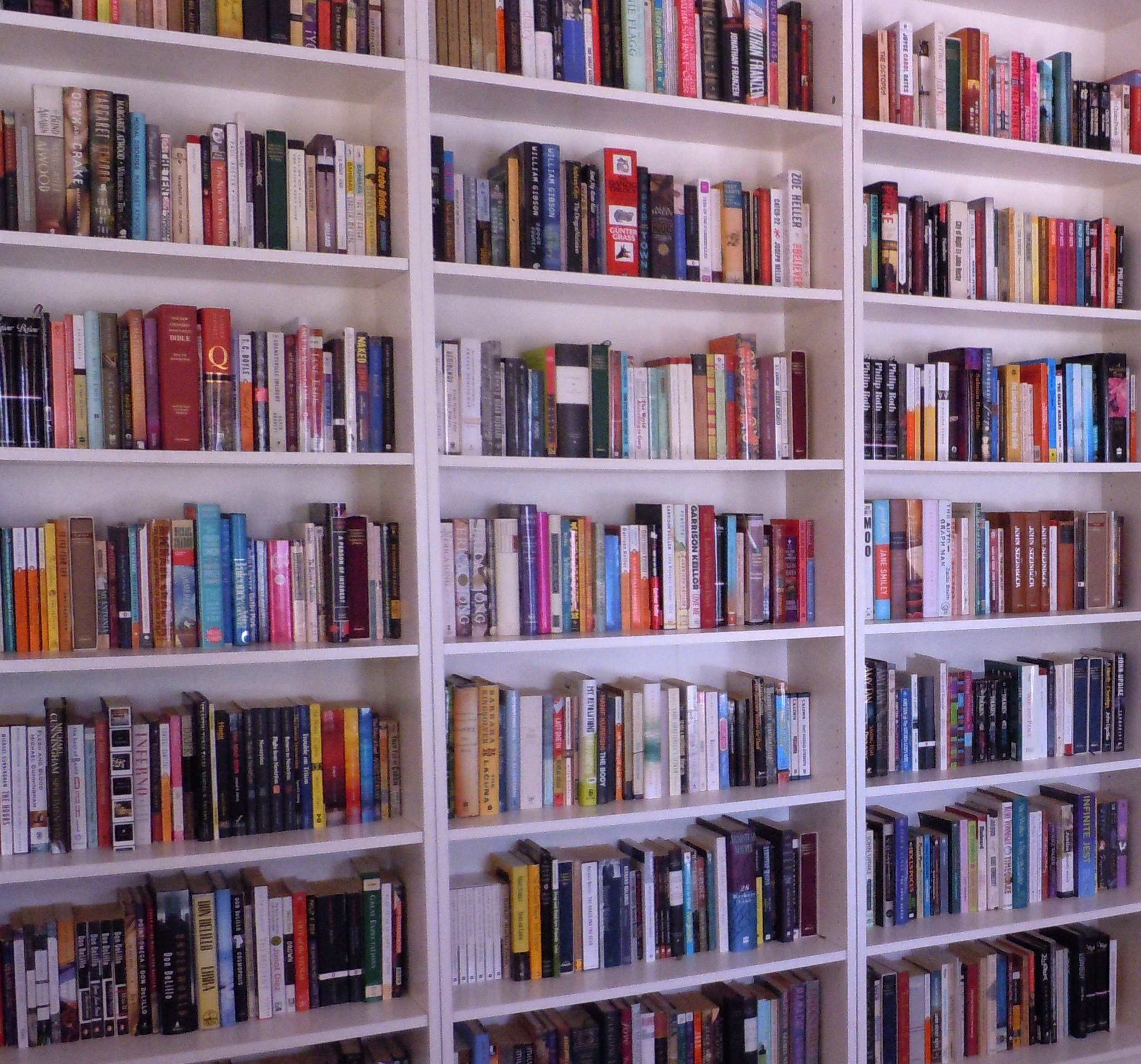
There is a fascinating and disturbing article by Ken Auletta in this week’s (June 25, 2012) New Yorker about the current legal face-offs between amazon.com and six large publishing companies in the U.S. (Random House, Penguin, Macmillan, Hachette, HarperCollins, and Simon & Schuster). Basically, Apple created a deal with the publishers to fix their ebook prices at a higher rate than amazon demanded from them, and amazon then entered into a similar deal, which has resulted in the publishers now being able to sell their ebooks on amazon at a slight profit rather than a loss, but the Department of Justice has initiated an antitrust lawsuit on behalf of consumers as a result (if you want all of the legal nitty-gritty, read the article itself [you need a subscription to the print version of the magazine to read the article online, so support print culture by going and buying a copy at your local newsstand!]—I’m more interested here in the larger ramifications for the future of books in general).
I am normally against big companies setting price controls because they hurt consumers, but in this case I am rooting for the publishers to win because they need the price controls in order to stay in business. Books are essential to a functioning democracy, and, while one could question whether our “democracy” is currently functioning considering how ridiculous the goings-on in Congress have been for the past fifteen years or so, anyone who has an interest in education or civil rights or, to put it bluntly, freedom must recognize the necessity of books and do everything they can to help protect them. If amazon—which I must admit I love and buy print books from frequently (I will never, ever buy an ebook as long as paper books exist), though this article forces me to re-think this practice—is able to force publishers to provide them with books at a loss to the publishers, the end result will be that publishers (especially independent publishers [including university presses], who are the most important because they publish valuable books that are not necessarily profitable, and thus would never be published by large publishers) begin to go out of business, leaving amazon as both distributor and publisher of books, which means that readers will be forced to accept their view of what is important enough to publish or not. I try not to let large corporations make these types of decisions for me.
The issue is not just about physical objects, it is about how ideas are disseminated, and the avenues available for this dissemination play a major role in what ideas are put into the public eye. The more of these avenues that are available, the more new ideas enter public discourse, which benefits everyone because it stimulates further thinking. Books (and print culture more broadly) have been the primary way of disseminating ideas since the 1500s (we see their power in the example of the Protestant Reformation, which would have been impossible without them), and while that does not mean that other forms of idea dissemination are invalid, it does mean that we must do everything we can to ensure that books will survive, which means ensuring that a competitive publishing field survives.
A note on ebooks versus real books: according to Auletta’s article, ebooks “make up about a third of all book sales” (37). More and more of my friends and colleagues, educated people who should know better, prefer ebooks because they are supposedly more “convenient” because you don’t have to carry them around and they take up less space. This is a ridiculous argument. If carrying several books with you is too much of a physical strain, you need to be in better shape anyway (or you are elderly or disabled, in which case I am willing to make an exception), so just think of it as some informal weightlifting. As a compulsive book-buyer, I can see the space argument, but a) you can do wonderful things with modular shelves from a store such as Ikea to maximize the space you have for your books, because any room is made better by the presence of books—they show that you are an intelligent person, which is always sexy; and b) the benefits that physical books have which ebooks do not far outweigh the minor problem of figuring out where to put your books, anyway. Aside from the unquantifiable aesthetic pleasure of holding and smelling an actual book in your hand as your read, enjoying the different fonts in different volumes and thinking about the history of the physical object in your hand if you acquired it used, a major benefit of real books is that you can flip through them, finding favorite passages with ease, or looking in the index for the subject you are interested in and going straight there. With ebooks, you are forced to go through chronologically, or at least chapter-by-chapter, not to mention ruining your eyes by using yet another electronic device (real books give me a much-needed break from the computer) and the uselessness of ereaders once we run out of fossil fuels.
A similar point is made in the article, which discusses how the process of browsing in a bookstore is essential for finding new authors, whereas online shoppers tend to just go straight for what they are looking for. This both hurts lesser-known authors and is less fun for customers. Part of the joy of book-buying is finding unanticipated treasures, and the chance of this is greatly diminished when shopping online. It is true that it is more convenient to shop at a site such as amazon’s—if I know what I’m looking for I can literally buy a book from them in less than sixty seconds—but the most convenient way isn’t always the best way. It’s fun to spend an hour or two just lazily browsing at your local bookstore. I fear that, the way things are going, this activity will no longer be an option when I am older. To prevent that horrific possibility, it is necessary to support printed books and reject their much less satisfying electronic impostors.
Theodora Keogh’s The Fascinator
Theodora Keogh’s 1954 novel The Fascinator is a stylistic departure from many of her other novels in that it follows numerous characters closely instead of one or two, and in that the climax occurs on the very last page rather than allowing room (sometimes too much room) for a denoument. The book is a slow, languid description of the build-up to an affair between a young Manhattan housewife and an older Yugoslavian sculptor. The reader knows almost immediately that they must end up having sex at some point, but the brilliance of the book is in putting this event off for so long (and thus constantly surprising the reader for the last 200 of the novel’s 250 pages) that it becomes unexpected when it finally occurs. The Fascinator is subversive like Keogh’s other works because the reader is rooting for Ellen and Zanic to consummate their flirtation even though they are both married. The mysterious magnetism between them affects us, too. The first third of the book is much clumsier than Keogh’s other writing–it takes her some time to figure out how to juggle all of the characters–but once the reader is hooked in to anticipating the sex scene and its aftermath (the latter which we never get, though it will almost certainly lead to the dissolution of Ellen’s marriage) the book is difficult to put down.
Once again Keogh does an excellent job of describing the desperation felt by her female characters in the pre-feminism 1950s. The women (even Ellen’s four-year-old daughter!) are skillful politicians, adept at wounding one another because it is the only power they have. Their viciousness is stunning because it is completely believable rather than being exaggerated, and the horrible thing is that the men are too clueless to have any idea that it is occuring.
Euro 2012 Quarterfinals Preview
The first round of Euro 2012 ended today with England beating Ukraine 1-0 and France losing to Sweden 2-0. England thus advance to the quarterfinals as the winners of Group D with France in second. The English victory was a stereotypically English display–defend, defend, defend, and score on a set piece. Wayne Rooney had a good game in his first match of the tournament after a two-match ban for a red card received during qualifying, and scored the only goal on a header in the aftermath of a corner kick. Soon afterwards, Ukraine looked to have equalized as a shot went over the line momentarily before being cleared by John Terry. But despite the fact that the extra goal-line official was standing right there, no goal was given and the English held their lead. However, earlier in the play Ukraine clearly had a player offside, so it wasn’t terribly unjust that the goal was ignored.
Steve McManaman, the color commentator for ESPN, said the incident was reminiscent of the 2010 World Cup match between England and Germany when Frank Lampard clearly scored, but the referee didn’t see the ball go over the line. However, McManaman called that play “Frank Lampard against West Germany,” and his partner Ian Darke didn’t correct him! This verbal slip both shows which era they grew up in and is an example of an odd trend in soccer commentary to assume that the current German team are only the successors of the West Germans, not the East Germans. Whenever anyone speaks about Germany’s previous successes, they always say that “Germany has won three World Cups” (or, more negatively if you are talking to an Englishman, “Germany lost the 1966 World Cup final to England”) but that’s not true–West Germany won three World Cups. There is a difference. If you are going to give the Germans all of West Germany’s successes, you have to give them all of East Germany’s (relative) failures, too.
Anyway, Ukraine needed to win in order to advance, and their failure to do so makes this tournament the second successive European Championship where both co-hosts have failed to advance (Switzerland and Austria were eliminated in the group stage in 2008). It is always sad when the hosts are eliminated immediately, but there are some exciting quarterfinal matchups to look forward to nonetheless. Here are comments on each match in the order they will be played:
Czech Republic vs. Portugal–Both teams are somewhat shaky on defense, and both rebounded with two wins after losing their first match. Portugal looked especially dangerous in their final match against Holland due to the emergence of Cristiano Ronaldo from his mini-slump, and I think this momentum will carry Portugal through to the semifinals.
Germany vs. Greece–The Germans were the only team to win all of their three first round matches, and looked fairly at ease doing so even though they only won each match by one goal. Greece is a tough team to beat because they are strong defenders and they take their few chances well, and Germany is not a flashy offensive team, so Greece might give them some trouble. But the Germans have too much quality, and will go through.
Spain vs. France–The juiciest of the four matchups. France looked like the second-best team of the tournament behind Germany until their uninspiring loss to Sweden. Conversely, Spain won their group in rather pedestrian fashion. Spain should win this match, but it really depends on which versions of the two sides show up. If France play the way they did against England and Spain play like they did against Croatia, I like the French. But those are two huge ifs. If each team plays to the average of their performances thus far in the tournament, Spain will win, because France must play their absolute best to have a chance.
England vs. Italy–Both teams have had middling performances that were enough to get them through to the quarterfinals, with England looking slightly more impressive. This match will come down to which teams’ stars have the best game. I really liked the way Wayne Rooney played today despite being rusty, so I’m picking England to move on.
Euro 2012: The Somewhat Surprising “Group of Death”
Euro 2012’s Group B, the “Group of Death,” concluded today with Portugal and Germany notching 2-1 victories against Holland and Denmark, respectively. Germany very impressively took the full nine points to win the group and Portugal finished second with six, with their only loss 1-0 to the Germans. Portugal have looked better every match they have played, and today their superstar, Cristiano Ronaldo, finally got on the scoresheet with both goals and at least three other near-misses. He is coming into form at the best possible time for the Portuguese, who will be the favorites in their quarterfinal against the Czech Republic. Portugal’s other superstar, Nani, also had a very strong match, setting up the second goal minutes after he had squandered a beautiful scoring chance himself. Portugal look very dangerous at the moment, and should be able to take advantage of the Czechs’ spotty defending. Likewise, Germany should have no problem beating Greece, though the Greece are, of course, experts at squeaking out shocking victories in matches like this.
It is not surprising that the Germans and Portuguese went through, though I predicted that Portugal would not. What is surprising is that the 2012 World Cup finalists Holland would fail to advance, and that they would do so with three losses and only two goals scored! It is their worst showing ever at a major tournament, and they were clearly the worst team in the group. They looked tired throughout the tournament as well as uninspired, as though they assumed that they could be on cruise-control until the knockout stages. Kudos to the other three teams in the group for taking advantage of this lethargy.
Books Acquired Recently: Theodora Keogh

Keogh, Theodora. The Fascinator. New York: Farrar, Straus & Young, 1954.
—. My Name is Rose. 1956. New York: Signet, 1958.
—. The Tattooed Heart. 1953. New York: Signet, 1954.
Theodora Keogh is my latest literary obsession, so I’ve been buying her out-of-print books on amazon.com as I find them (several of her novels have been reprinted by Olympia Press, thus I have been focusing on acquiring the out-of-print ones first). I love the look of old pulp fiction, and these editions are still in good condition because Signet was smart enough to produce them with colored page edges (I’m sure there is a technical term for this, but I don’t know it, which is terrible) to help protect the pages. I remember my elementary school librarian, Charles Kolataze at P.S. 97 in the Bronx, teaching us that books with this feature would last for years and years, but books without it would maybe only last for ten. Now, it is ridiculous to say that any book, even one being handled often by grubby children’s hands, will only last for ten years–see Nicholson Baker’s excellent exposé of this and other ridiculous librarian myths, Double Fold: Libraries and the Assault on Paper–but it is true that books with protected edges stay in good condition.
The first edition of The Fascinator (great title!) is also, well, fascinating, as it gives a glimpse into Farrar, Straus and Giroux’s (Why don’t they use the Oxford comma??? Arghhh.) early history. That third partner slot was apparently an unstable one, as The Fascinator has Young as the third partner and My Name is Rose notes that it was first published by Farrar, Straus & Cudahy.
Euro 2012: Group A Craziness
Euro 2012’s Group A ended today in surprising, fairly exciting fashion. The Czech Republic beat Poland 1-0 and Greece did the same to Russia, so the Czechs won the group with six points and Greece finished second with four points because their victory today gave them the tiebreaker over Russia, who also ended with four points. Co-hosts Poland finished last with two points.
Russia had looked like the strongest of the four teams in the previous two matches, and Greece the weakest, so the result of their match was especially surprising, but the Greeks’ desperate defending was too difficult for the Russians. The Russians would have advanced with a draw or a draw between the Czechs and Poles, but even though Poland, who needed to win, controlled the first half of their match they couldn’t score, and once the Czechs went ahead midway through the second half the only question was whether the Poles could spite them by scratching out a draw. They had a fantastic chance in the final minute of stoppage time, but the Czechs cleared the ball off the line. Thus the Russians’ streak of failures at major tournaments since the breakup of the Soviet Union continues, and Poland join Switzerland and Austria from Euro 2008 and South Africa from the 2012 World Cup as a host country that has failed to advance out of the group stage.
The Czechs will play the second-place team from Group B in the quarterfinals and the Greeks will play the first-place team. No matter who their opponents are, I expect the Group B (a.k.a. the “Group of Death”) teams to advance, though the Czechs might be finding their form at the perfect time. Their first-place finish looked nearly impossible after they lost their first match to Russia 4-1, but give them credit for taking care of business against the Greeks and Poles with two solid one-goal victories.
Euro 2012: The Situation After The Penultimate Group Matches
With only one set of first-round matches left, Euro 2012 is shaping up as a very exciting tournament. Only two teams, Ireland (who I picked to get to the second round, oops!) and Sweden, have been eliminated, and no team has guaranteed a berth in the quarterfinals, which means that all eight final group games are significant. Since the final two matches in each group are played simultaneously to help avoid result-fixing, it means that there will be lots of channel-flipping to keep track of the action. Here’s a group-by-group breakdown of how things look:
Group A
This has been a tight group, with all teams having at least one point. All of them need a result to assure passage to the next round. Russia will probably win the group since they play the last-place Greeks, who looked terrible in their last game against the Czechs, though if Greece wins they will move on. Co-host Poland must beat the Czechs to advance.
Group B
The “Group of Death,” where no one is safe or dead even though Germany have six points and Holland have zero. The Holland-Portugal match is the most intriguing, but if Denmark are able to upset Germany there could be a three-way tie at the top of the group. If Germany and Holland win there will be a three-way tie for second place.
Group C
Spain and Croatia each have four points, and will both go through unless Italy beats Ireland (a likelihood), in which case the Italians and the winner of Spain-Croatia will go through. If there is a draw in that match and the Italians win, there will be a three-way tie for the two qualification spots.
Group D
France currently leads England on goal difference for first place. Either team goes through if they get at least a draw, and both go through if England beats Ukraine no matter what France does. If Ukraine beats England, Ukraine and France go through unless France loses by multiple goals to Sweden.
The final set of group games is always fun because there is the constant updating of the “If Results Hold” table on television, and circumstances can change in an instant. In this case, it will be especially exciting because so many teams are still in contention. Fun times!
 Daniel Shank Cruz